
Ballistic & Gas-Tight Protection Systems
Gas-Tight Damper
Safety equipment installed in ventilation ducts to block the passage of gas.
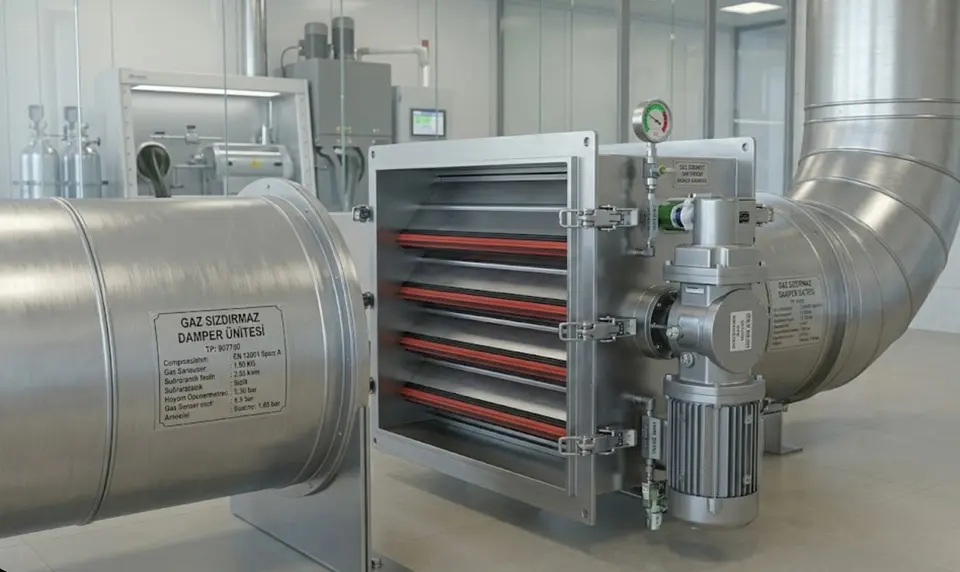
How it works
A gas-tight damper is a valve in a ventilation duct that shuts the duct completely when needed. Its blade seals against the frame so little or no gas passes. Used with gas-tight doors and filtration units, it keeps a protected room sealed, and it can be closed by hand, by actuator or automatically.
Typical applications
- Air inlets and outlets of protective shelters
- Ventilation ducts of sealed technical rooms
- Laboratories and control rooms with toxic gas risk
Key points when specifying
- Duct size, flow and pressure drop
- Leakage class in the closed position
- Actuation: manual, motorised and automatic closing on a signal
- Blast-resistance requirement for the damper itself
Is a damper enough to keep gas out?
No. A damper is one part of a sealed envelope. Walls, doors, cable and pipe entries and the air-supply system must be gas-tight too, and the room is normally kept at overpressure with filtered air. The sealed space should be tested as a whole.
Why do shelters need dampers on ventilation openings?
Ventilation openings are the weak points of a sealed shell. A gas-tight damper closes them when contaminated air or a blast pressure threatens, while the filtered supply continues through the filtration unit.
Technical specifications, protection levels and test reports are provided per project. Contact our engineers for details.
Other products in this group
Planning a protected facility?
Tell us about your site, threat scenario and timeline. Our engineers will respond with the right solution.