
Ballistic & Gas-Tight Protection Systems
Gas-Tight Door
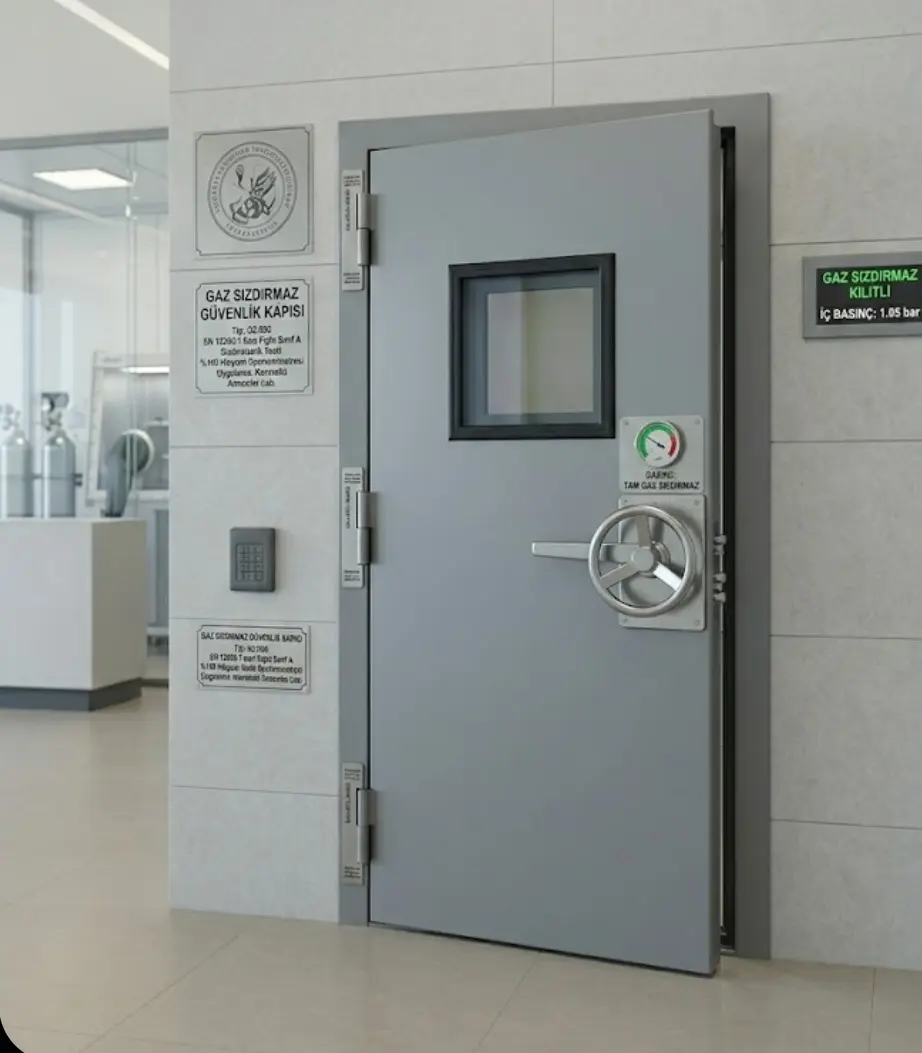
High-tightness door systems used mainly in military facilities, shelters and critical infrastructure to stop chemical, biological or toxic gases from entering controlled areas.
How it works
A gas-tight door is built to stop gas from passing through the closed opening. A compression or inflatable gasket seals the leaf against the frame, and multi-point locking presses it tight. The door is tested for leakage at an overpressure, and is normally used with an airlock and a filtered, pressurised air supply.
Typical applications
- NBC shelters and command posts
- Control rooms with toxic gas risk
- Laboratories and sealed technical rooms
Key points when specifying
- Gas-tightness requirement: permitted leakage rate and test pressure
- Combination with blast, fire or ballistic requirements
- Sealing system, threshold and locking method
- Use in an airlock and the opening and closing procedure
Is a gas-tight door the same as a blast door?
No. A gas-tight door is judged by how little gas leaks through it, while a blast door is judged by the pressure and impulse it can resist. Many shelter doors need both properties, so the specification should state the blast load and the allowed leakage separately.
How is the tightness of a gas-tight door checked?
By a pressure test: the door is closed in its frame, the space is pressurised to the specified value and the leakage or the pressure decay is measured against the allowed rate. The test is usually repeated on site after installation.
Technical specifications, protection levels and test reports are provided per project. Contact our engineers for details.
Other products in this group
Planning a protected facility?
Tell us about your site, threat scenario and timeline. Our engineers will respond with the right solution.