
Blast & Fire Protection Systems
Pressure-Vacuum Valve
Keep the pressure balanced in tanks and storage systems to protect the safety of the system.
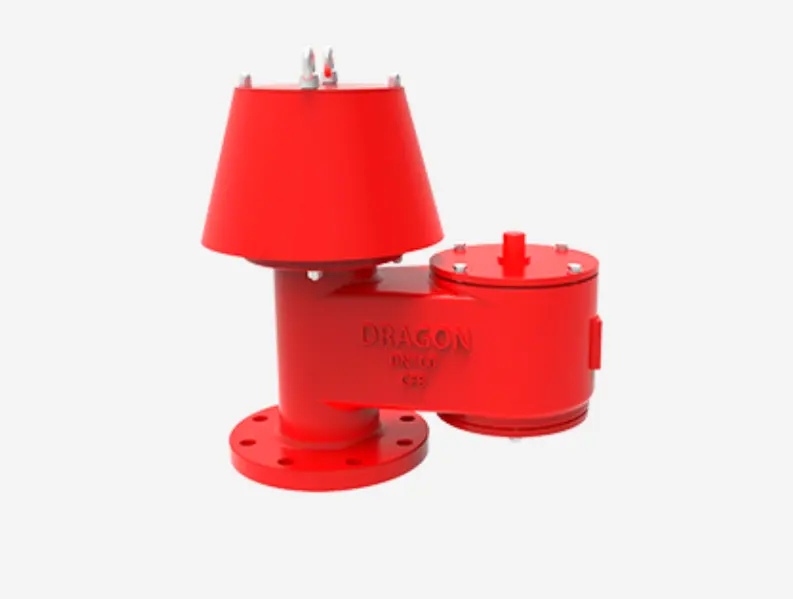
How it works
A pressure-vacuum valve, also called a breather valve, protects a storage tank from both overpressure and vacuum. It lets vapour out when pressure rises, for example while filling, and lets air in when the tank empties or cools. In between it stays closed, which keeps product vapour in the tank.
Typical applications
- Atmospheric and low-pressure storage tanks
- Fuel, solvent and chemical tanks
- Tanks that need to limit vapour losses
Key points when specifying
- Tank design pressure and vacuum limits
- Set pressures for pressure relief and for vacuum relief
- Breathing flow from filling, emptying and thermal effects (API 2000)
- Material compatibility with the stored product and the climate
Standards and guidance commonly referenced for this product type
These are general references. Compliance and test reports for a specific product are provided per project.
Why do tanks need both pressure and vacuum relief?
A tank shell is built for very low pressure and vacuum. Filling or heating pushes pressure up, while emptying or cooling can create a vacuum, and either can deform or burst the tank. A pressure-vacuum valve opens in both cases, within the limits given in API 2000 or ISO 28300.
Why does a storage tank need vacuum relief as well?
Because pumping product out or cooling the vapour can lower the pressure inside a tank below atmospheric. Atmospheric tanks are weak against vacuum, so the valve lets air in before the tank can collapse.
Technical specifications, protection levels and test reports are provided per project. Contact our engineers for details.
Planning a protected facility?
Tell us about your site, threat scenario and timeline. Our engineers will respond with the right solution.