
Security Glass
Multi-layer glazing systems that protect against armed threats and the effects of an explosion. They are typically used at military facilities, security checkpoints and critical public buildings.
How it works
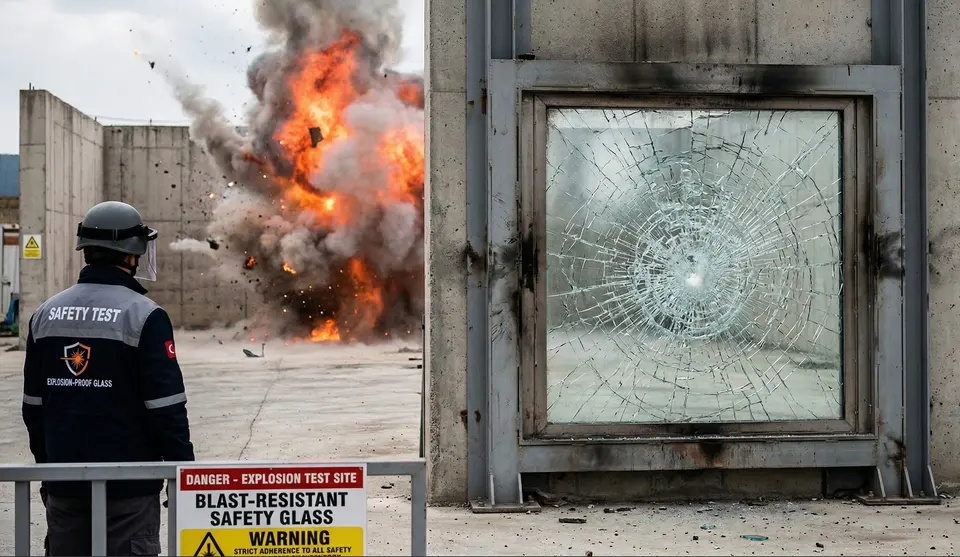
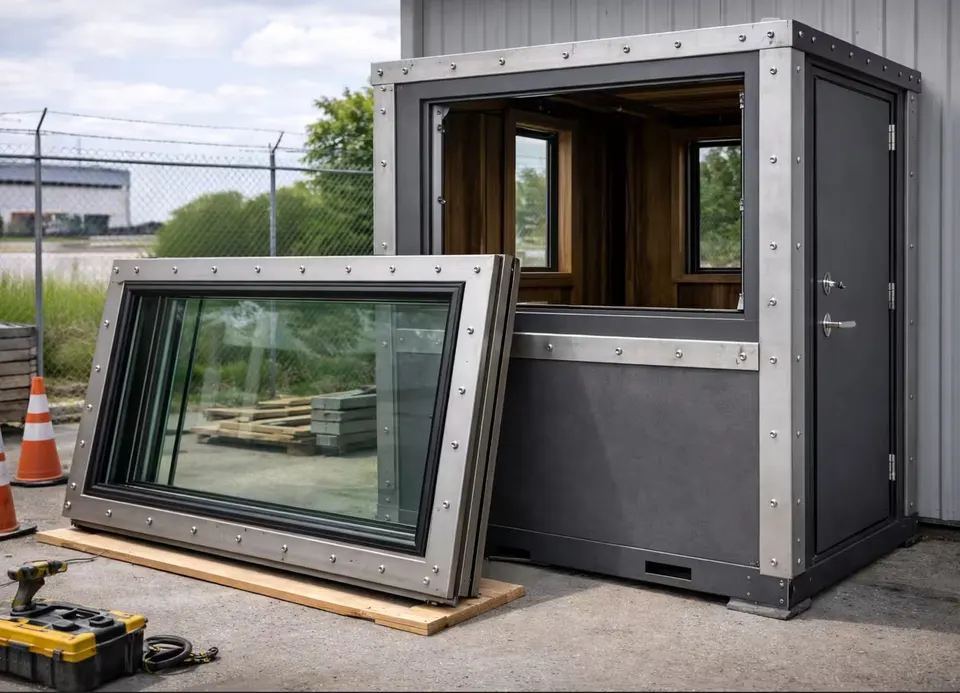
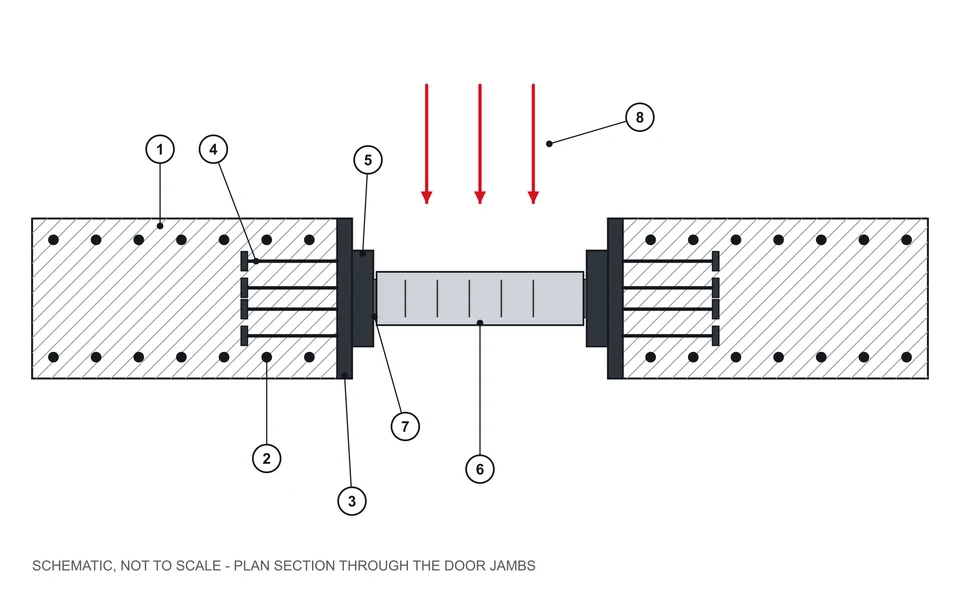
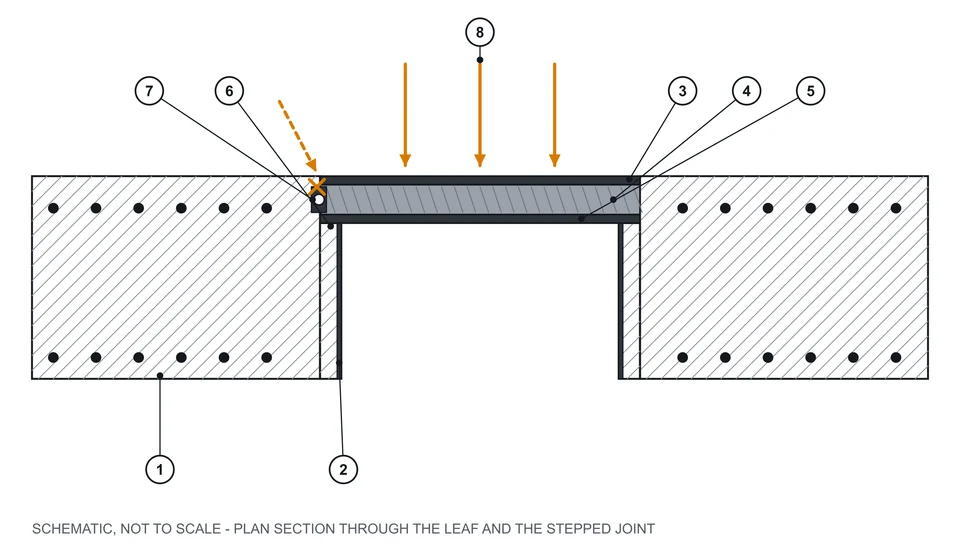
Security glass is made of several layers of glass, and sometimes polycarbonate, bonded together with tough interlayers. Ballistic glazing is built to stop projectiles, and blast-resistant glazing is built to stay in its frame and hold fragments together under an explosion. The frame, fixings and the wall around the glass are part of the protection.
Typical applications
- Guard booths and checkpoints
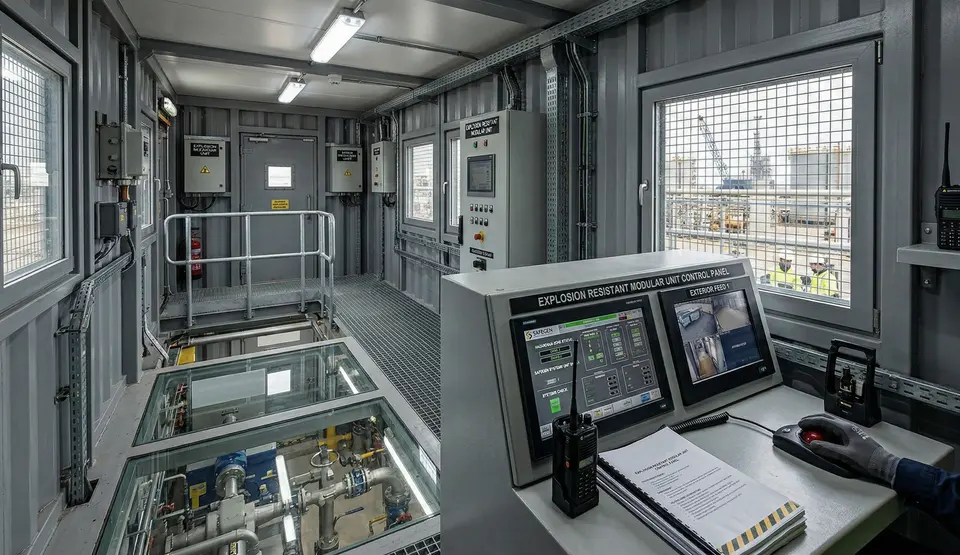
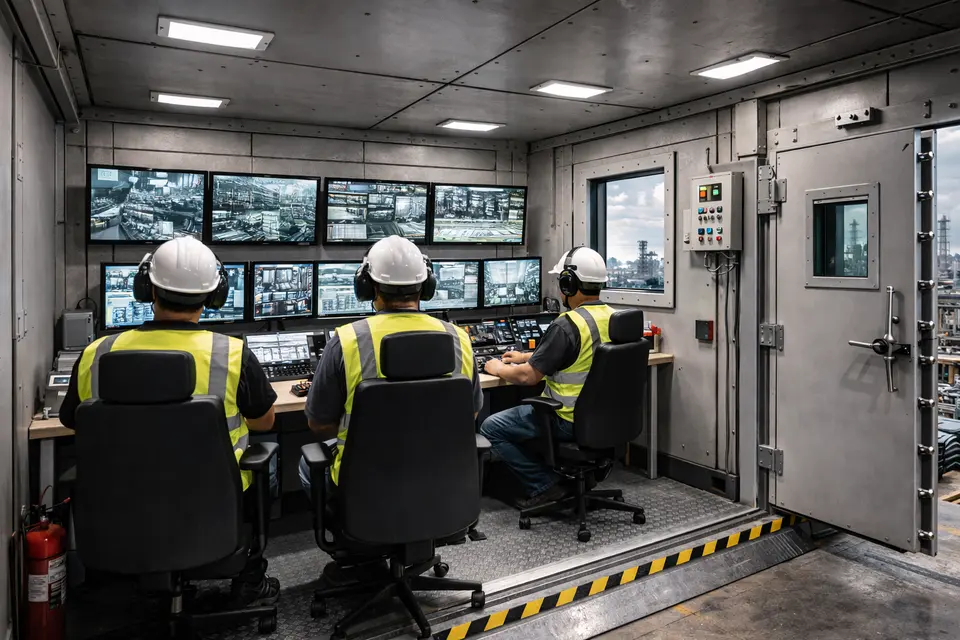
- Control-room and command-centre windows
- Entrances and reception areas of critical buildings
Features
- Multi-layer laminated glass
- Resistant to high pressure and fragment effects
- UV and thermal insulation for energy efficiency
- Steel or aluminium frame integration
Product range data
Values are indicative. Final values are set per project through engineering analysis, test reports and certificates. The standards named are a reference framework, not a certification claim.
- Construction: laminated glass with a polycarbonate interlayer
- Design blast load: from 0.1 bar up to 45 bar and above, set per project
- Light transmission above 85% and UV protection up to 99%
- Frame: steel, stainless steel or aluminium, sealed with EPDM or silicone
- Operating temperature: −40 °C to +80 °C
- Fitting: anchored in the wall or in a steel frame
- Options: opening sash, acoustic glass, double glazing, solar-control coating, facade integration, ballistic layer
- Ballistic and blast-resistant glass protects against armed threats and blast together, with a multi-layer laminated build; an anti-spall inner layer, speech port and document pass-through are available
Key points when specifying
- Threat: blast load and class, ballistic level, or both
- Glass size and the frame it will be fitted in
- Whether fragments must be kept from entering the room (anti-spall layer)
- Visibility, light transmission and thermal requirements
Standards and guidance commonly referenced for this product type
These are general references. Compliance and test reports for a specific product are provided per project.
Does ballistic glass also stop an explosion?
Not automatically. A bullet and a blast wave load the glass in different ways, so the glazing must be specified and tested for each threat it has to resist. The frame and anchorage must be designed for the same loads, otherwise the whole pane can fail at the edges.
Is thicker glass always more blast resistant?
No. Blast resistance comes from the build-up of layers, the interlayer, the bite in the frame and the anchoring of the frame, not from thickness alone. The glass and its frame are tested and classified together.
Technical specifications, protection levels and test reports are provided per project. Contact our engineers for details.
Planning a protected facility?
Tell us about your site, threat scenario and timeline. Our engineers will respond with the right solution.