
Radiation Shielding Doors
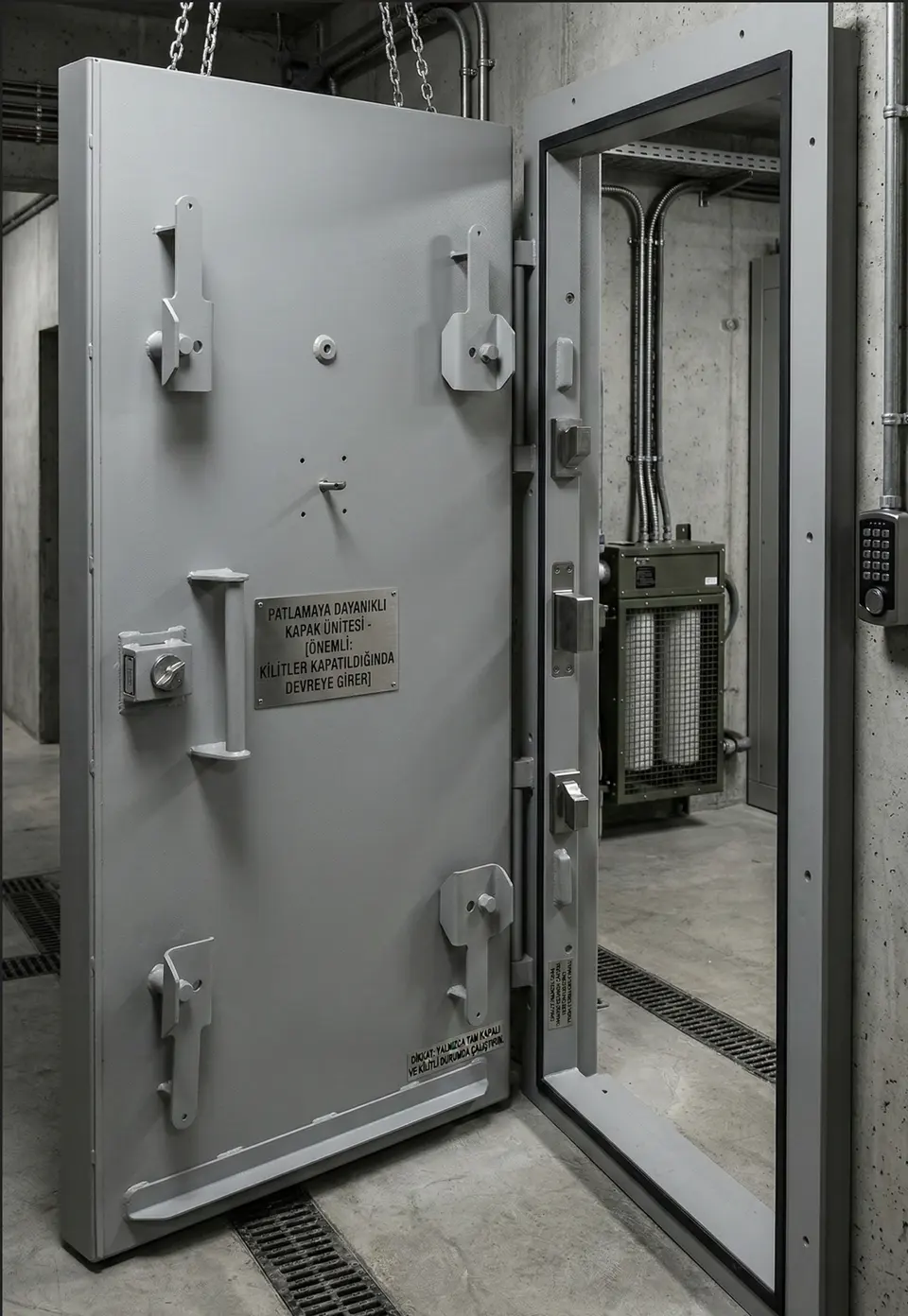
Radiation shielding doors close openings in rooms where ionising radiation is produced or stored, so that radiation does not pass through the door into occupied areas. A leaf with a dense shielding layer, usually lead between steel plates, and a stepped joint with the frame give the attenuation set by the radiation protection study.
How it works
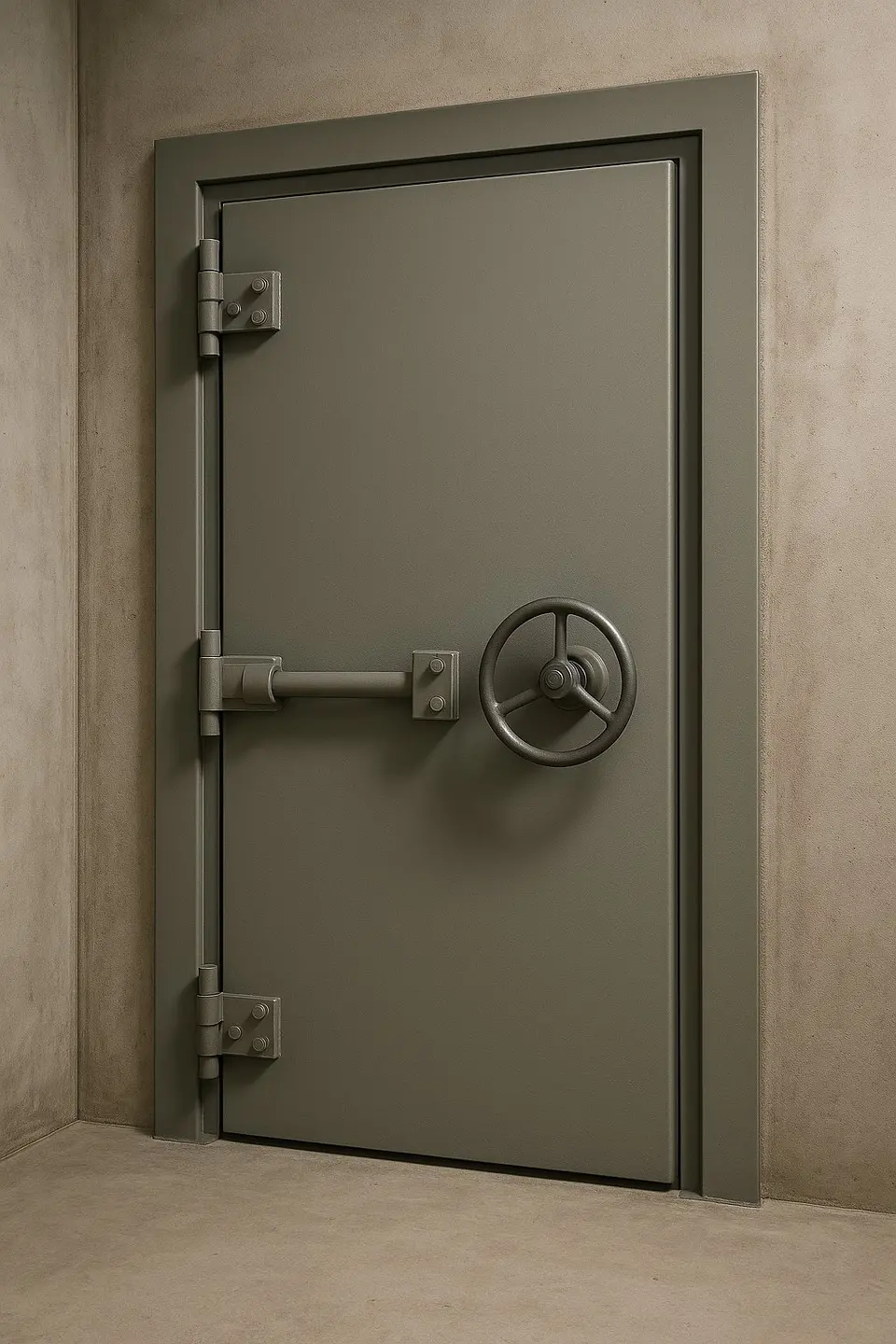
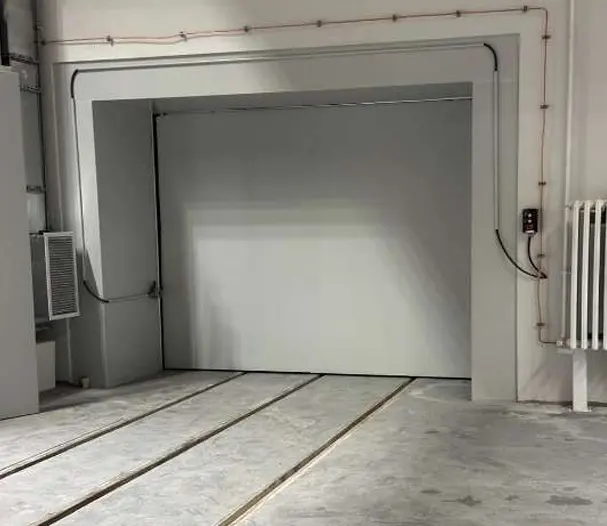
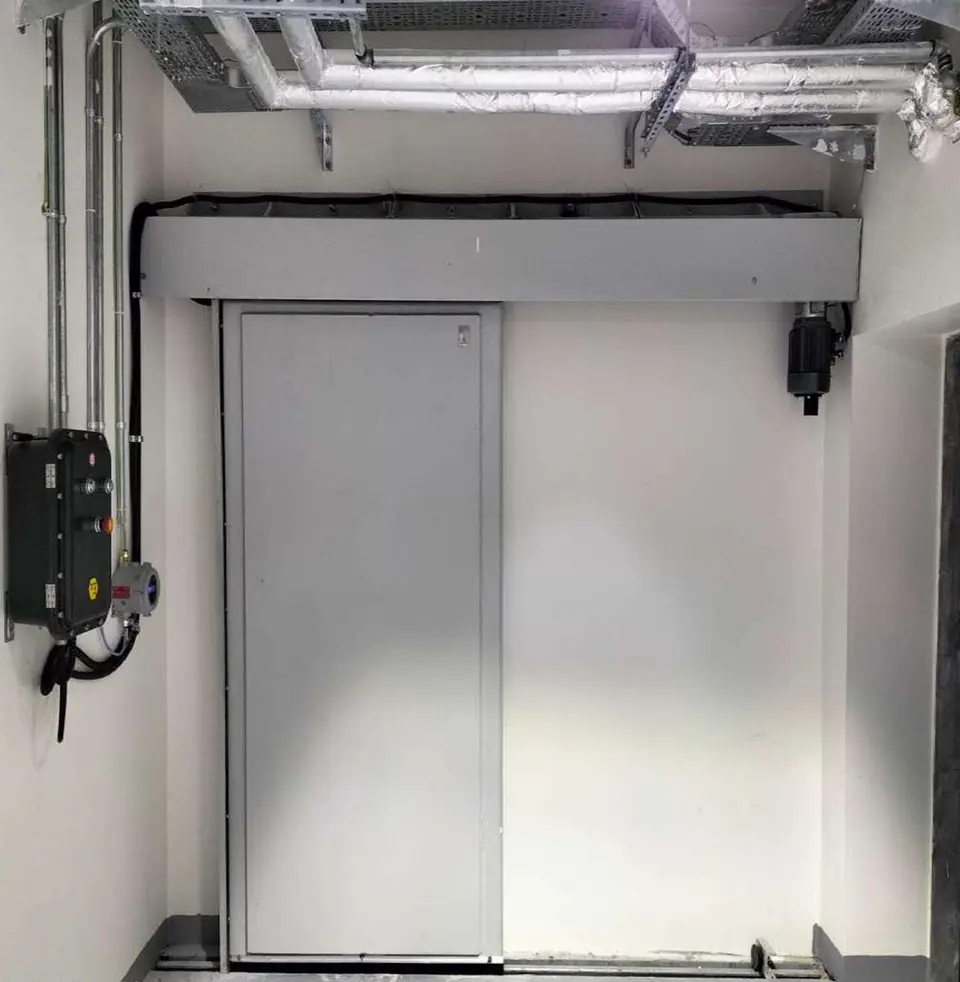
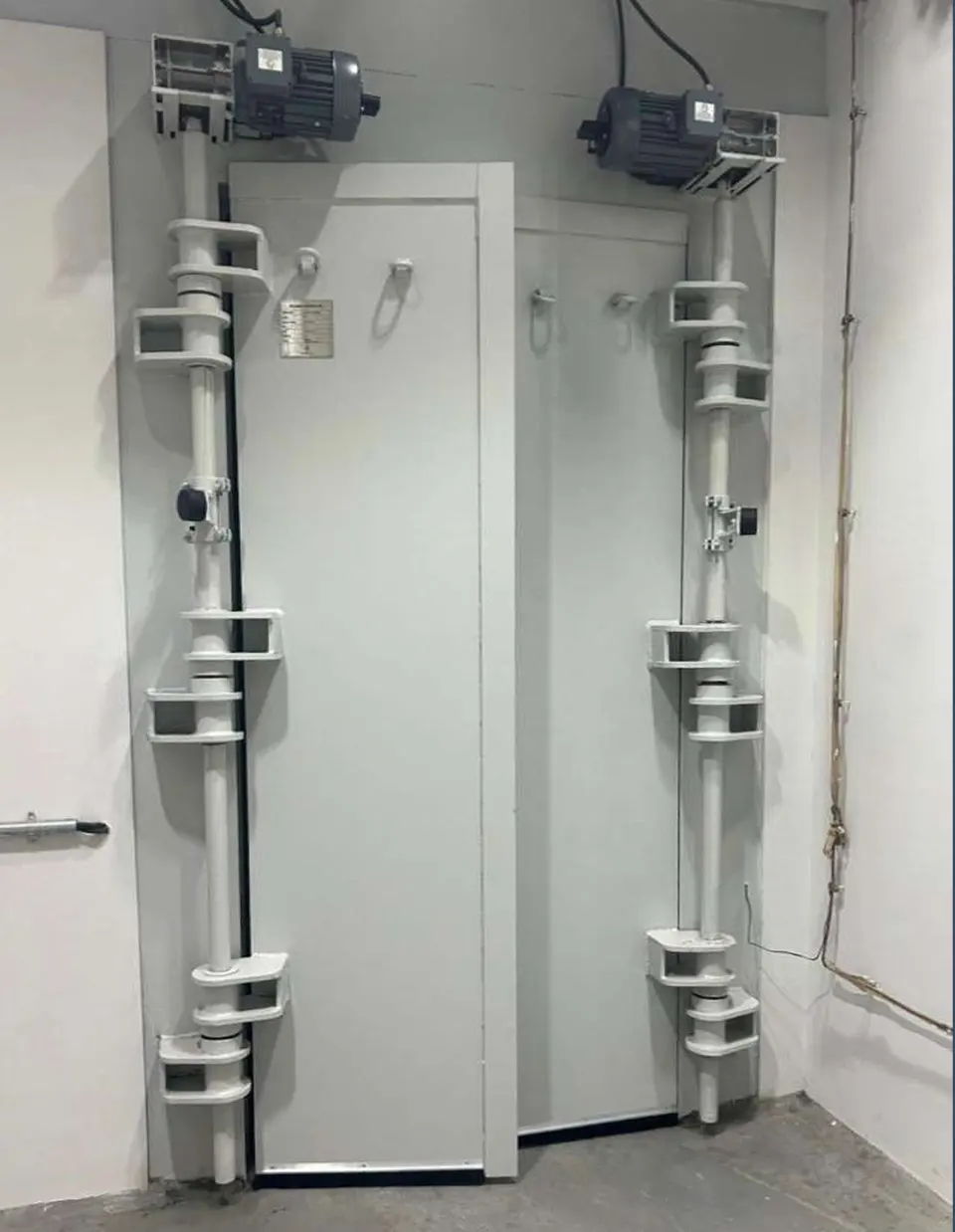
Radiation is reduced by mass. The leaf contains a layer of dense material, most often lead between steel plates, and for neutron sources hydrogen-rich or borated materials are added. The thickness is chosen so that the door gives the same attenuation as the surrounding wall, usually stated as lead equivalent for X-rays and gamma rays. Gaps are the weak point, so the leaf overlaps the frame in a stepped (labyrinth) joint instead of meeting it in a straight line, and the frame is shielded as well. Heavy leaves are carried on strong hinges or a motor drive, and interlocks, warning lights and an emergency release are fitted where the room requires them.
Typical applications
- X-ray, CT and radiotherapy rooms in hospitals
- Nuclear medicine and isotope laboratories
- Industrial radiography bunkers and irradiation facilities
- Nuclear and research facilities, and shelters that need a radiological barrier
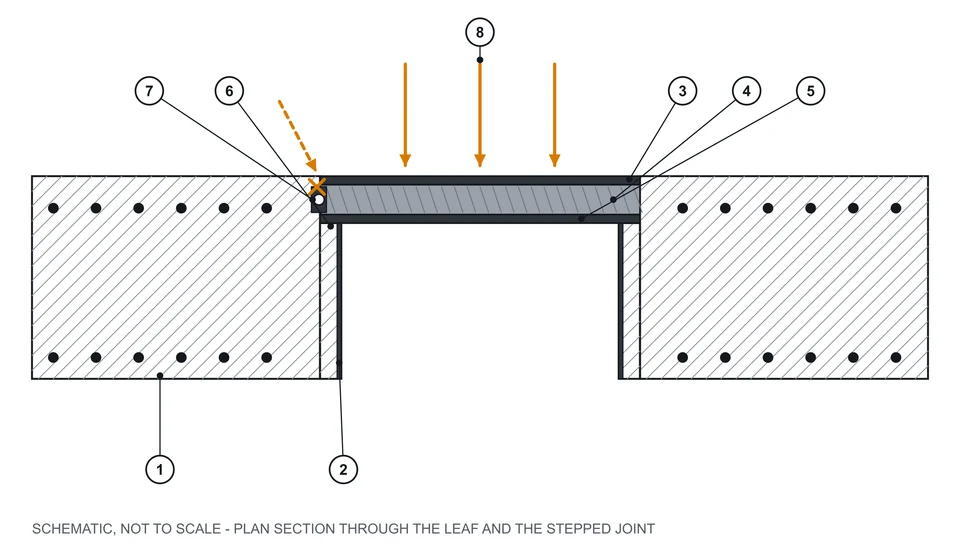
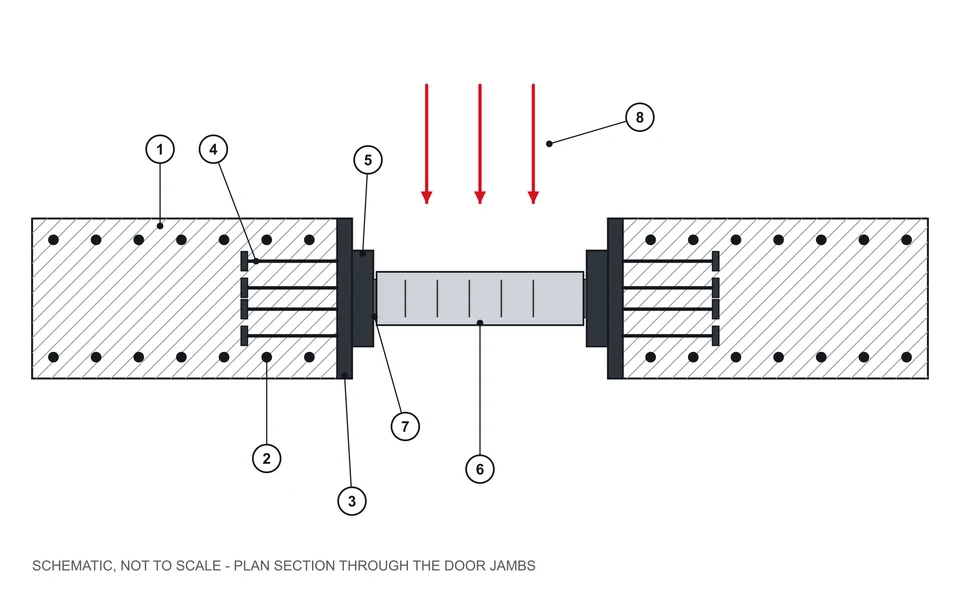
Schematic drawing: components
- Concrete wall
- Steel frame
- Outer steel plate
- Lead layer
- Inner steel plate
- Stepped overlap joint
- Hinge
- Radiation source side
Key points when specifying
- Radiation type, energy and the required attenuation (lead equivalent), from the radiation protection study
- Opening size and leaf weight, and the wall or frame that carries it
- Manual or motor drive, interlocks, warning lights and emergency release
- Extra requirements: fire resistance, gas tightness or blast resistance in the same door
Standards and guidance commonly referenced for this product type
These are general references. Compliance and test reports for a specific product are provided per project.
How is the shielding of a door specified?
Normally as a lead equivalent thickness (for X-rays and gamma rays) or an attenuation factor, set by the radiation protection study of the room for the radiation type, energy and workload. The door is then built with a shielding layer that matches the wall, and the joint and frame details are checked, because the weakest point decides the protection.
Why does the leaf overlap the wall instead of closing flush?
A straight gap along the edge lets radiation stream through. An overlap, or a stepped joint, forces the radiation to pass through shielding material along every path, so the joint gives the same protection as the leaf.
Technical specifications, protection levels and test reports are provided per project. Contact our engineers for details.
Planning a protected facility?
Tell us about your site, threat scenario and timeline. Our engineers will respond with the right solution.