
Hangar Door
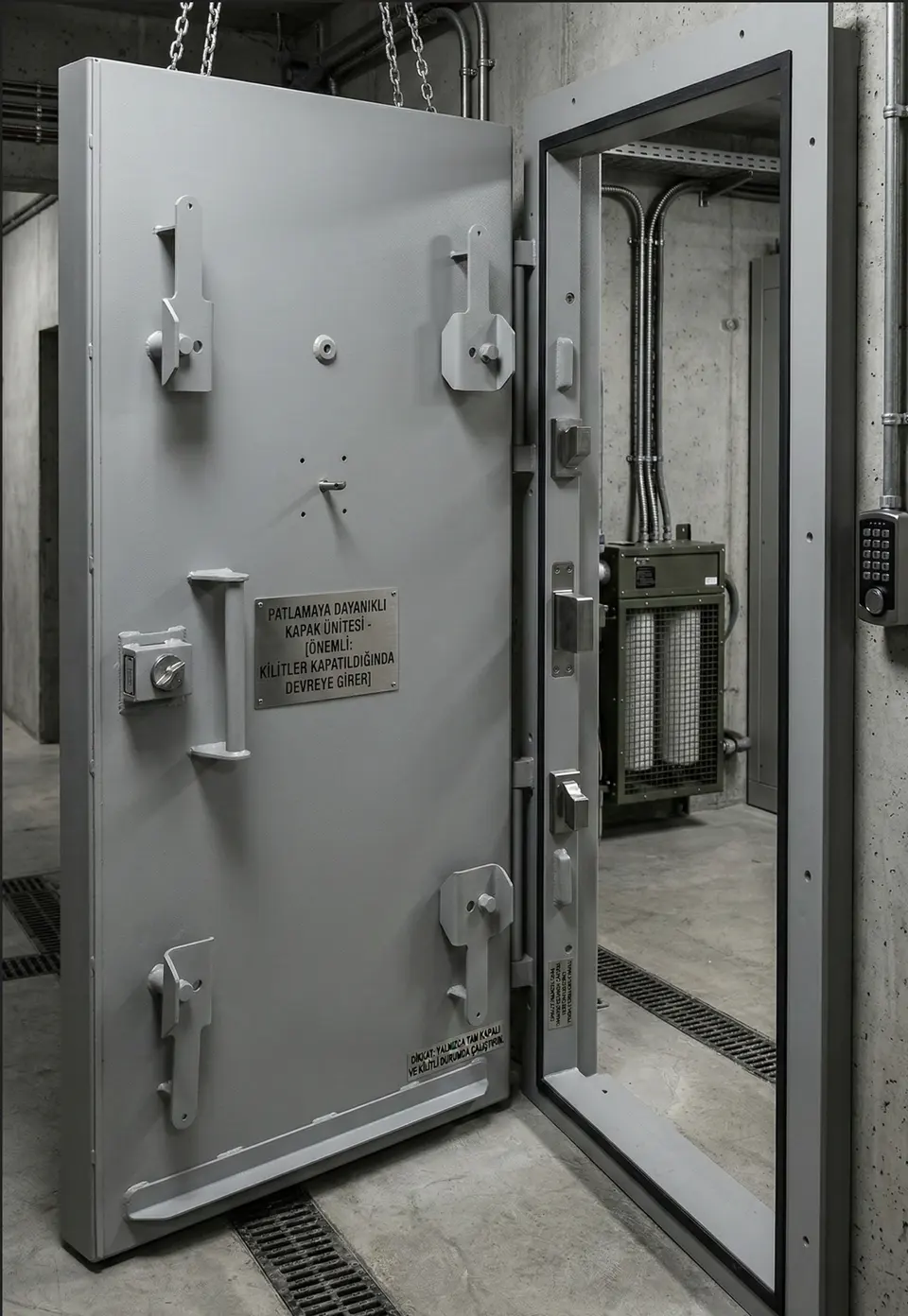
Doors for wide openings in military facilities, ammunition depots, aircraft maintenance areas and large industrial hangars. They keep their structural integrity under high blast loads and environmental effects.
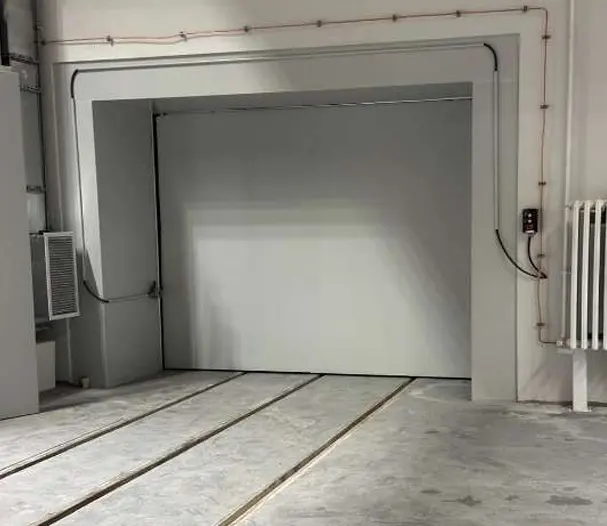
How it works
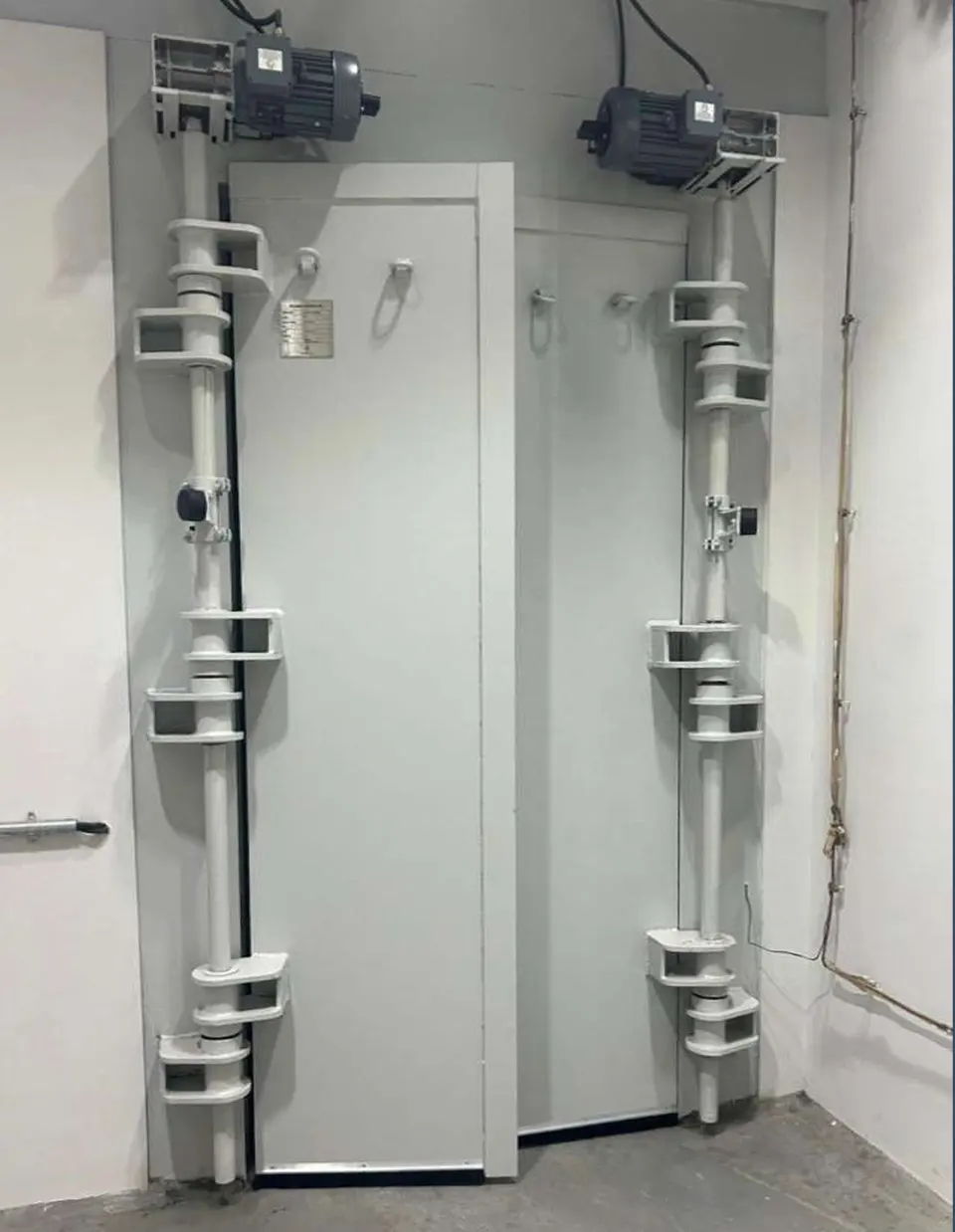
A hangar door closes a very wide and often tall opening, such as an aircraft hangar, a large workshop or an ammunition store. It is usually a sliding or multi-panel door built from heavy steel sections. For blast duty, the door, its guides and the surrounding structure are designed together for a defined blast load.
Typical applications
- Aircraft maintenance hangars
- Ammunition and equipment storage
- Large industrial workshops and halls
Key points when specifying
- Opening width and height, and the vehicles or aircraft that must pass
- Design blast load, its direction and the acceptable deformation
- Drive type, opening speed and operation during power loss
- Seals, thresholds and weather resistance
Standards and guidance commonly referenced for this product type
These are general references. Compliance and test reports for a specific product are provided per project.
What affects the design of a very large blast door?
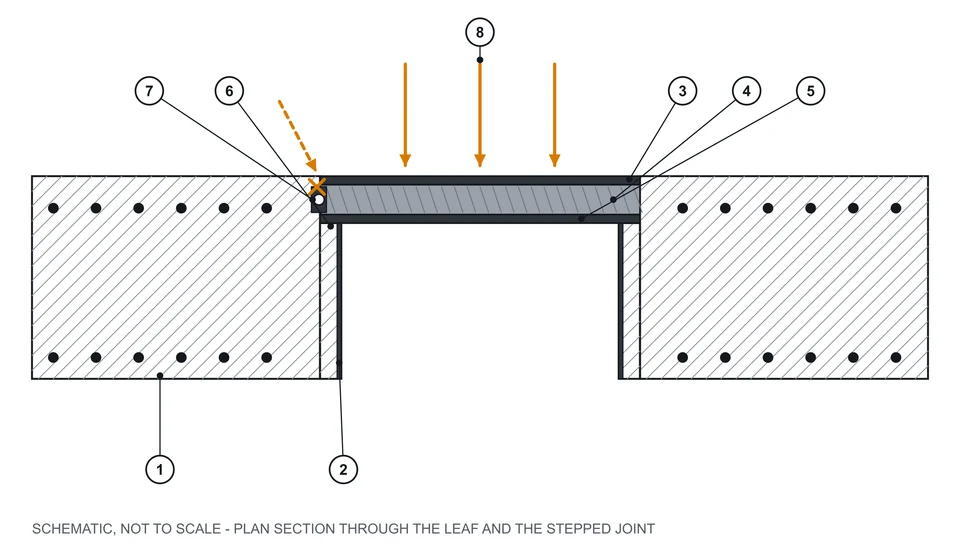
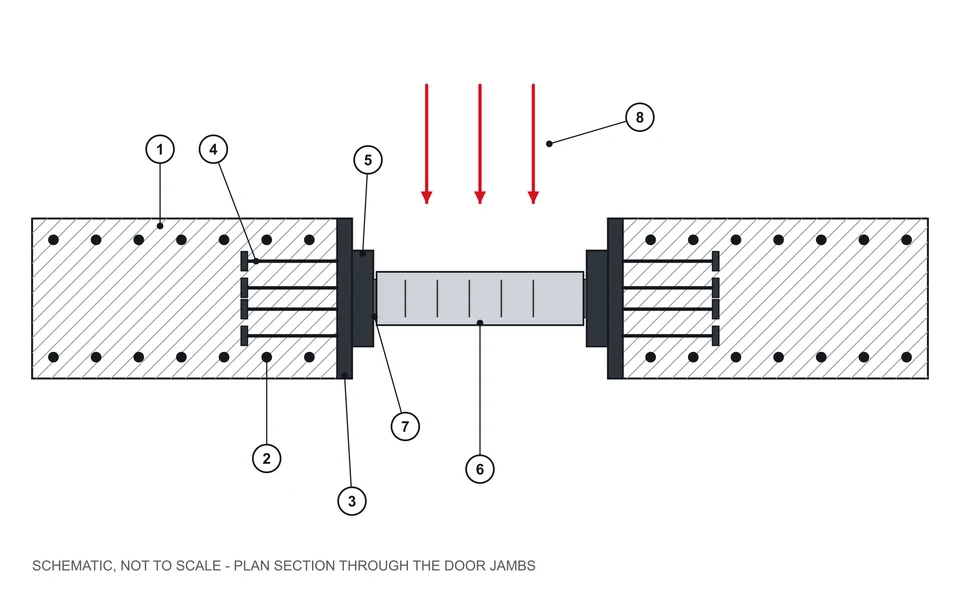
The blast load grows with the door area, so the frame, guides and supporting wall carry large forces and must be designed with the door. Weight, wind and temperature effects, operating speed and the power supply for the drive also drive the design.
Why are very large blast doors designed per project?
Because the force on a door grows with its area, and large doors are also heavy and slow to move. Leaf, tracks or hinges, drive, locking and the structure around the opening all have to be engineered together for the load and for the way the door is used.
Technical specifications, protection levels and test reports are provided per project. Contact our engineers for details.

Planning a protected facility?
Tell us about your site, threat scenario and timeline. Our engineers will respond with the right solution.