
Sliding Door
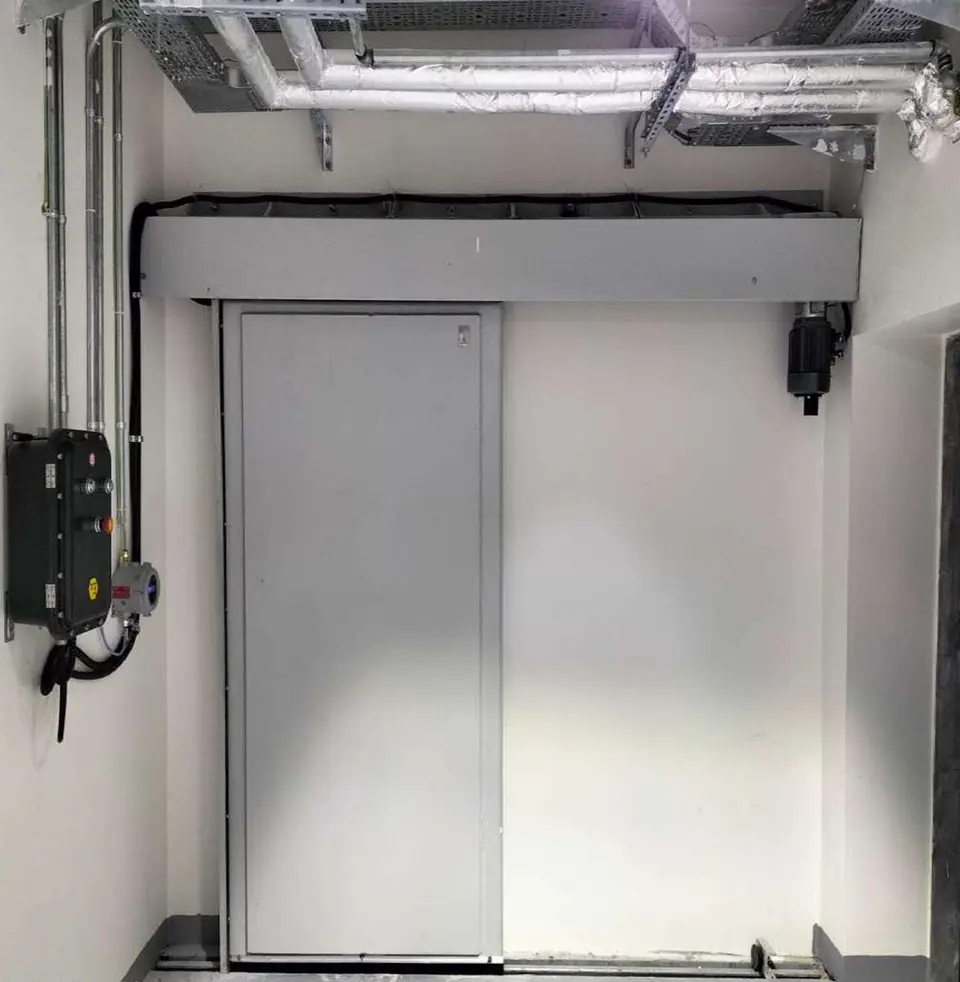
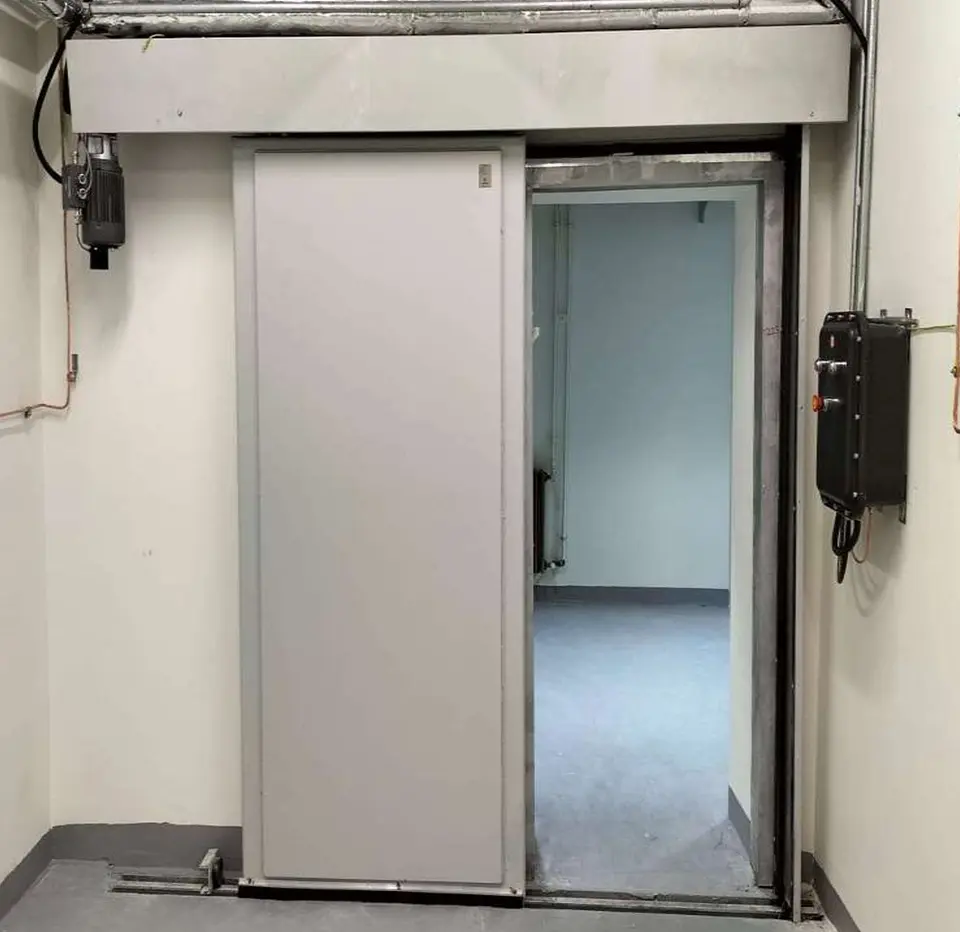
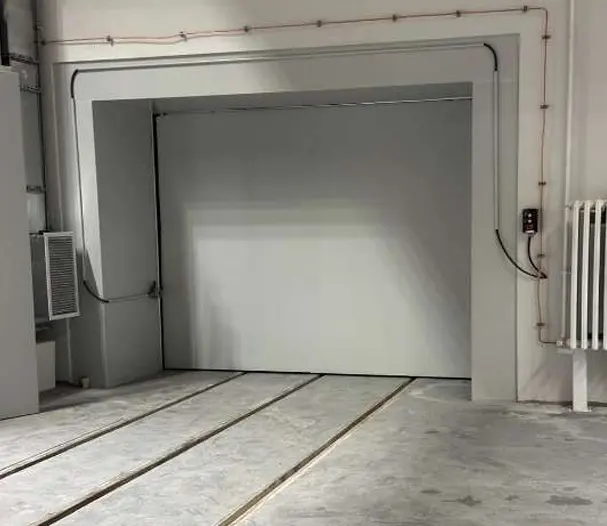
Doors for protecting large openings. A rail mechanism lets the large door panels move easily, and the high-strength steel construction gives maximum protection against explosion pressure.
How it works
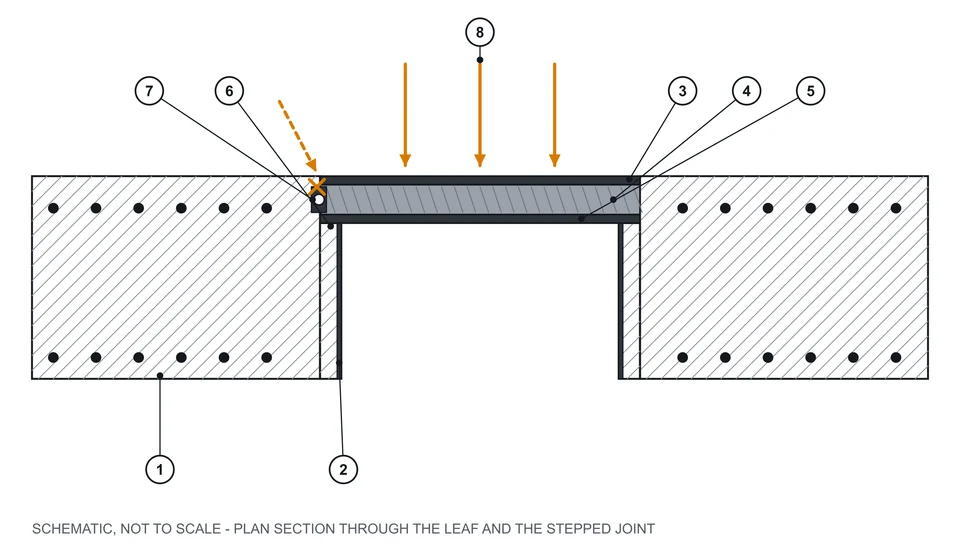
A sliding blast door moves on a track instead of swinging, which suits very large openings where a hinged leaf would be impractical. In the closed position it locks against the frame to carry the blast load. The track, rollers and locking system are designed to work reliably under the weight of the door leaf and in the site environment.
Typical applications
- Large openings in process and storage buildings
- Protected vehicle and equipment access
- Industrial facilities where swing space is limited
Product range data
Values are indicative. Final values are set per project through engineering analysis, test reports and certificates. The standards named are a reference framework, not a certification claim.
- Design blast load: from 0.1 bar up to 45 bar and above, set per project
- Single or double sliding leaf, opening to the right or left
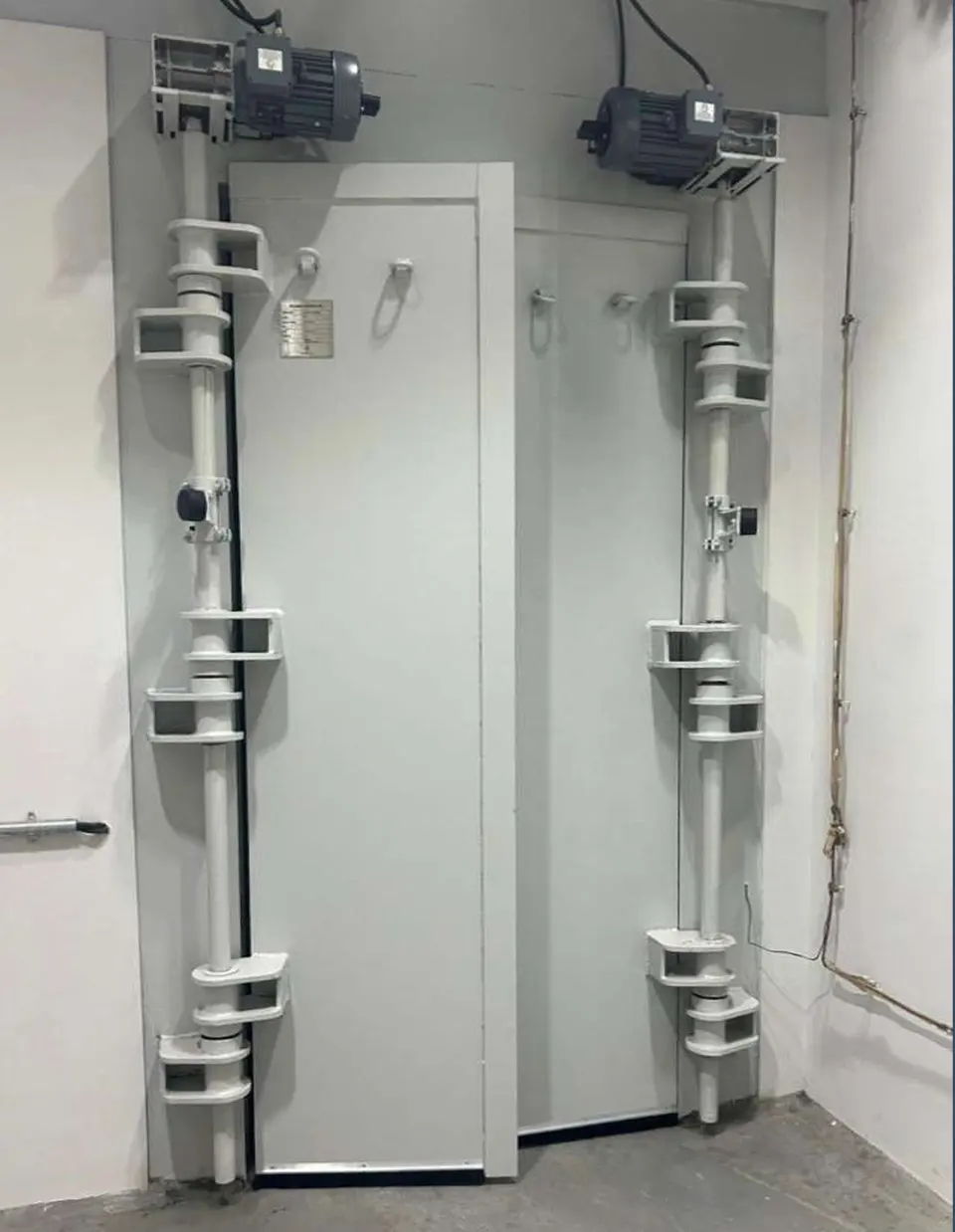
- Drive: manual or electric motor (Ex-proof motor optional)
- Heavy-duty rails and rollers, with a replaceable special sealing gasket
- Control: push-button panel, remote control or integrated system
- Optional fire resistance (EI60, EI90, EI120), ballistic protection (EN 1522 FB4 to FB7), forced-entry resistance (RC3 to RC5) and gas tightness (CBRN)
- Materials and surface protection as for hinged doors
- Optional equipment: emergency manual opening, UPS or backup power, obstacle detection sensor, card access control, vision panel
Key points when specifying
- Clear opening and the space beside the opening for the leaf to slide
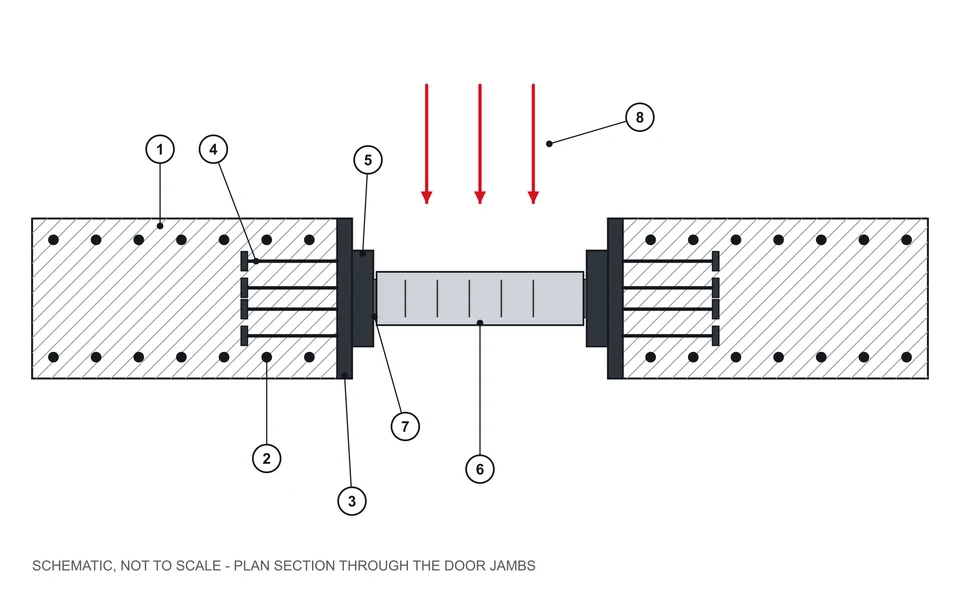
- Design blast load and which side the blast comes from
- Rail, carriage and drive design, and manual back-up operation
- Locking and sealing in the closed position
Standards and guidance commonly referenced for this product type
These are general references. Compliance and test reports for a specific product are provided per project.
What should be checked for a sliding blast door?
Check how the closed door transfers the blast load to the frame and wall, how the track and rollers are protected from dust, ice or debris, and how the door is opened if power fails. The opening time and the available side space for the leaf to retract also matter.
Where does a sliding blast door make sense?
Where the opening is large and there is no room for a hinged leaf to swing, for example equipment access or vehicle passages. The rail, carriages and locking are designed for the blast load, so they differ from those of a standard industrial sliding door.
Technical specifications, protection levels and test reports are provided per project. Contact our engineers for details.

Planning a protected facility?
Tell us about your site, threat scenario and timeline. Our engineers will respond with the right solution.